The Expectations Senior Leaders Never Agreed To
Victoria Canham • 3 June 2026 • 3 min read

June Leadership Series · Part 1 of 4
There is a version of your role that exists on paper. Scope, remit, accountabilities. The version that was discussed when you took the job, or were promoted into it, or built it from the ground up yourself.
Then there is the version you are actually doing.
For most senior leaders, the gap between those two things has been growing steadily for years, not through any single decision. Through accumulation of one responsibility absorbed here, one gap stepped into there, one crisis managed, one team steadied, one conversation nobody else was prepared to have. Each one reasonable in isolation. Together, they constitute a role that nobody designed and nobody agreed to, and that you are now carrying as though it were always yours.
It was not always yours. That matters.
How It Happens
A leadership team is in a weekly executive review. The agenda is tight. Decisions only.
A cross-regional performance issue is raised. It should sit with the regional leadership structure. Instead, the meeting immediately pivots.
“Let’s bring her in on this.”
No one asks whether it belongs to her remit. No one checks escalation rules. No one challenges ownership. The assumption is instant and automatic.
Next item: a delayed hiring pipeline in one business unit. Same response.
“She’ll need to unblock it.”
Then a stakeholder conflict between two senior directors. Again, the same reflex.
“Best to escalate it to her.”
Within twenty minutes, three structurally unrelated issues have migrated upward; not because of policy, but rather because of pattern.
The COO is not even in the room, but she is effectively running it. The organisation has built an invisible dependency loop around her capacity to absorb ambiguity.
What is not said is more important than what is.
Nobody in that meeting believes these issues formally belong to her role. If asked, they would describe a distributed leadership model with clear accountability. On paper, they would be right.
In practice, the system has already made a different decision.
By the end of the week, her diary reflects it. More “quick alignments”. More “urgent sense-checks”. More items that should have been resolved one level below, now parked at the top for speed, certainty, or comfort.
No escalation policy changed, no restructure was reversed, no decision was formally taken.
Yet her role has expanded again, through avoidance.
This is the point most leadership teams miss. They do not create overload through intention. They create it through repeated permission, until dependency becomes normal and normal becomes unchallenged.
What It Actually Costs
The cost is not just fatigue, though fatigue is part of it.
The more significant cost is strategic. When a senior leader is absorbing the organisation's unmet needs by default, they are operating reactively rather than strategically. The thinking that should be going into direction, priorities, and people is going into whatever landed on the desk this week. The decisions that need the clearest head are being made by someone who is already at capacity before the important things arrive.
The second cost is to the people around you. Teams take their cues from the most senior person in the room. When that person is visibly absorbing everything, the implicit message is that this is what leadership requires. The next generation of leaders is watching and learning that taking on too much is normal. It is not a quirk of your particular role; it’s just what being serious looks like.
The third cost is personal. It accrues slowly and is the hardest to account for because by the time it shows up clearly, you have long since stopped noticing it building. The hobbies and interests you set aside. The relationships that thinned. The version of yourself that existed before the role consumed the whole picture.
The Question Worth Asking
Not "how do I manage this better." That question accepts the premise that the current workload is correct and the problem is your management of it.
The more useful question is: which of these things were actually my responsibility?
Some of what senior leaders take on is genuinely theirs. The weight of accountability for major decisions, the responsibility for setting direction, the consequence of calls that affect many people, all belong to the role and accepting them is part of what the role means.
What belongs to the role is a much shorter list than what most senior leaders are actually taking on.
The rest is accumulation. Gaps in organisational design that you have been filling. Emotional labour that should be distributed and is instead concentrated. Problems that were someone else's to solve and found their way to you because you were available and capable and too senior to push back without it looking like weakness.
Identifying which is which requires more honesty than most organisations encourage, and more space than most senior leaders allow themselves.
What This Series Is About
Over the next four weeks, this series examines the four types of weight that senior leaders carry without having agreed to them.
The expectations weight (this piece) is the starting point. What gets added to a senior role over time, how it happens, and what it costs when nobody stops to examine it.
The performance weight comes next: what the organisation deposits at the top by default and calls leadership.
Then the culture weight: the emotional regulation that senior leaders provide, largely unacknowledged, and what happens to the organisation when they stop.
Finally, the personal weight: what gets deferred across a senior career and what that deferral actually looks like when the bill arrives.
None of these pieces are about resilience. They are about reality, specifically, the gap between what was agreed and what is being carried, and what it takes to close that gap deliberately rather than waiting for something to break.
If something in this resonates, it is worth paying attention to, because the first step to carrying less is being clear about how much you are carrying and why.
This is Part 1 of a four-part June series: What You Are Carrying That Isn't Yours to Carry.
Next week: The Performance Weight — what gets left to the most senior person by default, and why the organisation calls it leadership.
If you are a senior leader carrying more than you agreed to, let’s have a working conversation about where the load is actually sitting in your organisation.
♦️ Hi, I'm Victoria Canham. I work with senior leaders, executives, founders and organisations when performance, pressure and people dynamics reach a point where the usual tools stop working.
My work sits at the intersection of leadership psychology, organisational performance and culture reality. I help executive teams navigate strained relationships, cultural brittleness, emotional fatigue, and the quiet erosion of trust that most businesses prefer not to acknowledge.
This isn't "feel-good" leadership development. It is measured, commercially grounded support that builds capability, deepens emotional resilience, and helps leaders operate with greater clarity, strength and humanity.
♦️ How I support organisations and senior leaders:
Executive Advisory
I work alongside CEOs and senior leaders as a trusted, discreet thinking partner. We deal with the real conversations, the emotional load of leadership, decision-making under pressure, and the personal dynamics that affect performance and culture.
Leadership Facilitation & Development
I design high-level development that respects intelligence, emotional reality and commercial context. These programmes help leaders communicate better, hold difficult conversations safely, and lead in a way that is firm, clear and credible.
Culture, Performance & Retention Support
I help organisations stabilise culture and strengthen psychological safety in ways that shift behaviour and engagement — not just look impressive on a slide deck.
If your leadership team is under strain, if relationships feel tense, or if the culture is becoming brittle, it may be time for a different conversation.
Book a confidential call to talk openly, think clearly and work out what your organisation really needs. No theatrics. No fluffy platitudes. Just honest, expert partnership.
Follow me on LinkedIn for human, psychologically intelligent leadership that actually works in the real world.

Comment On This Article
Recommended Reading
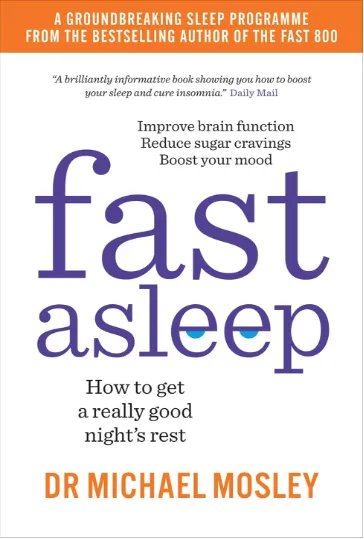
Fast Asleep: How to get a really good night's rest by Dr Michael Mosley
A good night's sleep is essential for a healthy brain and body. So why do so many of us struggle to sleep well? In Fast Asleep, Dr Michael Mosley explains what happens when we sleep, what triggers common sleep problems and why standard advice rarely works.
Prone to insomnia, he has taken part in numerous sleep experiments and tested every remedy going. The result is a radical, four-week programme, based on the latest science, designed to help you re-establish a healthy sleep pattern in record time.
With plenty of surprising recommendations - including tips for teenagers, people working night shifts and those prone to jet lag - plus recipes which will boost your deep sleep by improving your gut microbiome, Fast Asleep provides the tools you need to sleep better, reduce stress and feel happier.
We’re not just about overcoming obstacles, we’re about transforming lives.
Book Recommendation
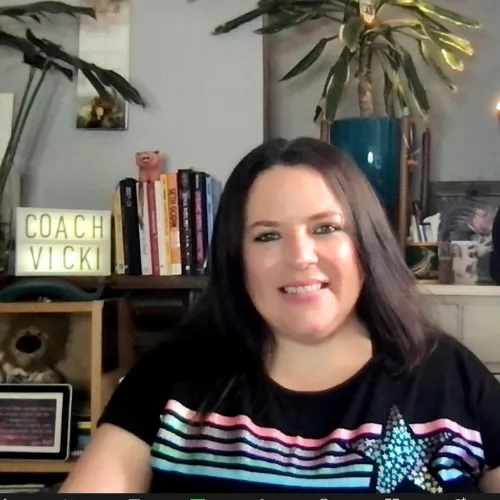
Victoria Canham - Performance and People Strategic Consultant
Victoria Canham works with executive leaders and organisations when performance, culture and emotional pressure collide.
She is a Change Leader with over 25 years of experience, an ICF-accredited Professional Coach and founder of Victoria Canham Consultancy. Her practice focuses on strengthening leadership capability and organisational performance in the real world, not just on paper.
With twenty-five years in talent development, behavioural insight and large-scale change, she supports senior leaders navigating strained relationships, brittle cultures and high-pressure decision-making. Her work helps leadership teams stabilise, rebuild trust and operate with greater clarity and authority.
She is brought in when organisations cannot safely hold difficult conversations internally—when executive teams have stopped saying what needs saying, when founders need to step back, when high-performing individuals are costing more than they deliver. She creates the conditions where those conversations can actually happen, and where organisations can move forward from them.
The result is leadership that functions under pressure, cultures that hold up in practice, and teams equipped to perform sustainably.
Follow us on social media


💸 Your people don’t leave for money. 💣 They leave for culture. 🔧 I fix that. 🏆 Retention & performance strategy that works.
Book a ☎️ | Fix the Leaks


© Copyright 2026 Victoria Canham Coaching | Website built by Me on FEA Create (aff.)
Performance Coaching Reading, London, Berkshire, Oxford | St George's Road, Reading, Berkshire, United Kingdom, RG30 2RL | +44 7377 527 529 | [email protected] Open Monday to Friday 9 am until 5 pm