
Leadership Maturity: The Courage to Take Responsibility for Your Own Evolution
Victoria Canham • 11 February 2026 • 7 min read
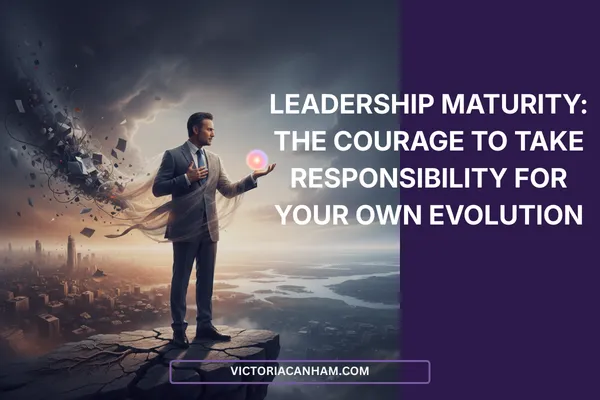
Leadership maturity begins when you run out of excuses.
Most senior leaders reach a point in their career where competence is no longer the constraint because they are very capable, experienced, delivering under pressure in complex environments. On paper, there is nothing “wrong” with how they lead.
And yet something begins to feel wrong and the cycle begins to repeat itself with the same tensions, same relationship frictions and the same patterns and cracks start to show, even though the team, or even organisation, is different.
This is often the moment leaders reach for the familiar; more strategy, more structure, more capability building. External levers are easier to pull than internal ones. They preserve the sense that the problem lives “out there”, in the system, the team, the context.
Leadership maturity begins when that story no longer quite holds water.
The Developmental Shift Most Leaders Are Not Prepared For
There is a developmental threshold in senior leadership that is identity.
Early leadership is about skill. Mid-career leadership is about judgement. Senior leadership is about identity.
At this level, the primary instrument of leadership is no longer what you know or what you can do, but who you are under pressure. This includes your emotional range, your relationship to authority, and your capacity to stay present in tension without becoming defensive, controlling, avoidant or fragile.
This is not a comfortable shift to make, and many leaders would prefer to refine their toolkit than examine the parts of themselves that become activated when things are uncertain, contested or personally threatening.
And yet the organisation already experiences those parts.
Your team already adapts to them. The system already compensates for them.
This compensation has a price. It costs roughly 18 months of culture change effort when a senior leader finally departs, having never addressed what they brought to every room. Eighteen months of rebuilding trust that eroded slowly enough to go unnamed. Eighteen months of untangling the unspoken rules others learned to survive around. The organisation pays the tax long after the leader has moved on.
Leadership maturity is the moment you stop pretending that your inner world is private.
Responsibility Is Not About Blame
Taking responsibility for your own evolution is about agency, the adult stance that says: regardless of how I came to be this way, I am responsible for my impact now.
It is fair to say you did not choose your nervous system, or your early conditioning, nor the patterns that once kept you safe and successful, but you are responsible for how those patterns now shape your leadership presence, your tone in difficult conversations, your capacity to hold disagreement without collapsing into control or withdrawal.
This is where many leadership development efforts stall. Leaders gain insight into their patterns and mistake that insight for evolution. They can explain why they react the way they do, they can trace it to history, temperament, past roles, past pressures and yet, they continue to react the same way.
Insight becomes a story, a story becomes an alibi and nothing actually changes. Leadership maturity begins when understanding yourself is no longer enough.
Why This Stage Feels Uncomfortable
For high-performing leaders, personal responsibility at this level can feel destabilising because it removes some of the psychological protection that comes from competence. It invites you to examine the parts of your leadership that have been effective and costly at the same time.
Accepting that the leader you have been is not sufficient for the complexity you now hold is the price of evolution.
Leadership maturity is not about becoming someone new, rather it is about becoming more responsible for who you already are.
From Performance to Presence
At senior levels, leadership is less about driving performance and more about shaping conditions. The conditions in which others think, decide, take risk and speak truth.
Those conditions are shaped less by your strategy documents and more by:
- How you handle disagreement.
- How you respond when challenged.
- How you carry your own uncertainty.
- How much of your emotional state you export into the room.
This is why personal responsibility is a strategic one.
Leaders who take responsibility for their own evolution create environments with more trust, more clarity, and more psychological room for others to contribute fully. Leaders who do not tend to reproduce the limits of their own inner world at scale.
The organisation does not outgrow the leader’s emotional range, it adapts to it.
The Quiet Work That Changes Leadership
There is nothing glamorous about this stage of leadership development. It’s not very visible and it usually comes with very little appreciation because it is private, inner work that is often uncomfortable and humbling.
It is the work of noticing yourself in real time and interrupting habitual responses, while staying present when it would be easier to default to control, charm, withdrawal or certainty.
This is what leadership maturity looks like in practise, it’s not some grand reinvention. It is you with an increased range, more choice, less shooting from the hip and more responsibility for the impact you create.
If it feels confronting, that is usually a sign that you are at the right edge of your development.
The Invitation
You do not need to become a different person to lead well, but you do need to become more responsible for the person you are being when it matters.
Leadership maturity is the courage to stop outsourcing your evolution to circumstances, teams, structures or timing. It is the willingness to take responsibility for the inner conditions you bring into every room.
The patterns that got you here will not survive what comes next. The only question is whether you outgrow them by choice, or exhaust them by default.
♦️ Hi, I'm Vicki. I work with senior leaders and organisations when performance, pressure and people dynamics reach a point where the usual tools stop working.
My work sits at the intersection of leadership psychology, organisational performance and culture reality. I help executive teams navigate strained relationships, cultural brittleness, emotional fatigue, and the quiet erosion of trust that most businesses prefer not to acknowledge.
This isn't "feel-good" leadership development. It is measured, commercially grounded support that builds capability, deepens emotional resilience, and helps leaders operate with greater clarity, strength and humanity.
♦️ How I support organisations and senior leaders:
Executive Advisory
I work alongside CEOs and senior leaders as a trusted, discreet thinking partner. We deal with the real conversations, the emotional load of leadership, decision-making under pressure, and the personal dynamics that affect performance and culture.
Leadership Facilitation & Development
I design high-level development that respects intelligence, emotional reality and commercial context. These programmes help leaders communicate better, hold difficult conversations safely, and lead in a way that is firm, clear and credible.
Culture, Performance & Retention Support
I help organisations stabilise culture and strengthen psychological safety in ways that shift behaviour and engagement — not just look impressive on a slide deck.
If your leadership team is under strain, if relationships feel tense, or if the culture is becoming brittle, it may be time for a different conversation.
Book a confidential call to talk openly, think clearly and work out what your organisation really needs. No theatrics. No fluffy platitudes. Just honest, expert partnership.
Follow me on LinkedIn for human, psychologically intelligent leadership that actually works in the real world.


Comment On This Article
Recommended Reading
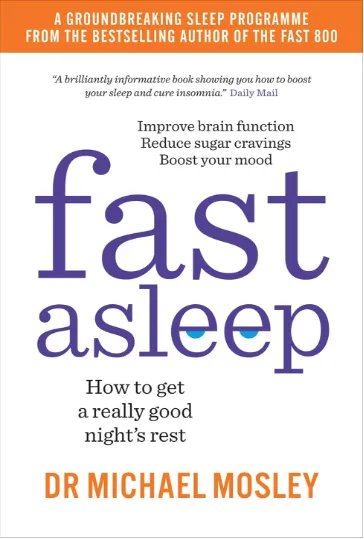
Fast Asleep: How to get a really good night's rest by Dr Michael Mosley
A good night's sleep is essential for a healthy brain and body. So why do so many of us struggle to sleep well? In Fast Asleep, Dr Michael Mosley explains what happens when we sleep, what triggers common sleep problems and why standard advice rarely works.
Prone to insomnia, he has taken part in numerous sleep experiments and tested every remedy going. The result is a radical, four-week programme, based on the latest science, designed to help you re-establish a healthy sleep pattern in record time.
With plenty of surprising recommendations - including tips for teenagers, people working night shifts and those prone to jet lag - plus recipes which will boost your deep sleep by improving your gut microbiome, Fast Asleep provides the tools you need to sleep better, reduce stress and feel happier.
We’re not just about overcoming obstacles, we’re about transforming lives.
Book Recommendation
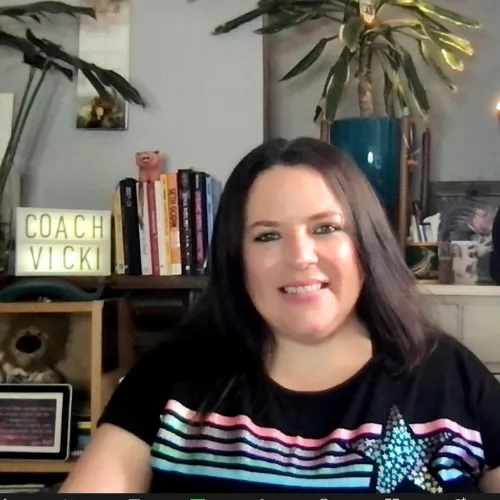
Victoria Canham - Performance and People Strategic Partner
Victoria Canham is a senior Performance and People Strategic Partner, working with executive leaders and organisations when performance, culture, relationships and emotional pressure collide. She is an ICF-accredited Professional Coach and the founder of Victoria Canham Consultancy, a specialist practice focused on strengthening leadership capability, resilience, psychological safety and organisational performance in the real world, not just on paper.
With a background in behavioural insight, leadership psychology and large-scale change, Victoria supports senior leaders navigating strained relationships, brittle cultures, team fatigue and high-pressure decision-making. Her work helps leadership teams stabilise, communicate more effectively, rebuild trust and operate with greater clarity, humanity and authority.
She partners with CEOs, senior leaders and HR to address what is actually happening beneath performance headlines, guiding organisations through the conversations and capability shifts they cannot safely or effectively manage internally. The result is stronger leadership, healthier cultures, more resilient teams, and organisations better equipped to perform sustainably.
Follow us on social media


💸 Your people don’t leave for money. 💣 They leave for culture. 🔧 I fix that. 🏆 Retention & performance strategy that works.
Book a ☎️ | Fix the Leaks


© Copyright 2026 Victoria Canham Coaching | Website built by Me on FEA Create (aff.)
Performance Coaching Reading, London, Berkshire, Oxford | St George's Road, Reading, Berkshire, United Kingdom, RG30 2RL | +44 7377 527 529 | [email protected] Open Monday to Friday 9 am until 5 pm