Personal Responsibility Is the Turning Point in Leadership
Victoria Canham • 25 February 2026 • 6 min read
There is a moment in most senior leaders’ careers when the rules change.
Early success is usually built on capability, intelligence, work ethic, strategic thinking, and delivering results under pressure. These things matter, and they carry people a long way.
At some point, though, the same leader notices something it's quite uncomfortable to admit.
The problems are repeating.
Even if they have moved to a different organisation or team and are now working with completely different personalities, the same tensions appear.
Trust takes longer than it should. Certain conversations remain difficult. Teams hold back more than expected. The culture never quite becomes what the leader intended.
At that point, many leaders start looking for external explanations (read: things to blame).
“The talent isn’t strong enough.”
“The culture was broken before I arrived.”
“The board sends mixed signals.”
“The market is relentless.”
Sometimes those things are true, but leadership maturity begins when someone becomes willing to ask a more confronting question.
What if the common denominator is me?
Recognising responsibility is the turning point.
Success Can Delay Leadership Maturity
High performers often reach senior leadership precisely because their approach has worked for years. Their characteristics of decisiveness, high standards, speed and control are all qualities that drive results and earn promotions.
The difficulty is that the same habits that create early success can later create distance.
A leader who moves fast may stop listening carefully.
A leader with high standards may unintentionally create caution in others.
A leader who solves problems quickly may train their team to rely on them.
None of this is malicious; in fact, most of it is invisible to the person doing it.
From their perspective, they are simply working hard and expecting the best, but from the team’s perspective, something else may be happening.
This is often visible in a drop in energy in meetings, people editing themselves before speaking, and issues surfacing later than they should.
This is where leadership stops being about competence and starts becoming about self-awareness in action.
Understanding Yourself Is Not the Same as Taking Responsibility
Many senior leaders understand themselves quite well.
They have done personality diagnostics.
Leadership programmes.
Executive coaching.
360 feedback.
They can often describe their style with impressive accuracy, but awareness alone does not change impact.
A leader may know they are impatient under pressure and still shut people down in meetings. They may understand that they intimidate others and still rely on that intensity to get things done.
Insight without responsibility becomes an intellectual shield.
The real shift happens when a leader moves from:
"That’s just how I am."
to
"If that is how I am, then I am responsible for the effect it has."
This is the difference between insight and maturity.
The System Eventually Mirrors the Leader
Organisations adapt to the behaviour of the people with the most authority, not the values on the wall, nor the leadership model.
The behaviour.
If a leader becomes defensive when challenged, challenging disappears.
If a leader subtly rewards overwork, exhaustion spreads.
If a leader avoids conflict, politics fills the space.
Over time, the system reflects the emotional patterns of the people running it.
That can be confronting for senior leaders because it means culture is not something they simply design. It is something they demonstrate. Or worse, it’s something they tolerate.
Daily.
Responsibility Is Not Self-Blame
This is where many capable leaders resist the conversation.
Personal responsibility can sound like blame, or like carrying the entire organisation on one's shoulders.
That is not the point.
Responsible leadership is recognising that power amplifies impact.
The more authority someone holds, the more their behaviour shapes what others feel is safe, risky, encouraged or pointless.
Mature leaders accept this influence rather than arguing with it; they become curious about their effect.
They ask better questions.
What happens to the room when I enter it?
What behaviours do I unintentionally reward?
Where do people become cautious with me?
These questions require courage; they also unlock change much faster than structural initiatives alone.
Changing Yourself Is the Strategic Move
Many organisations attempt culture change through programmes.
Programmes ultimately bring new frameworks, new values and new language. Sometimes useful, but culture rarely shifts unless the behaviour of senior leaders shifts first.
When a leader becomes more open to challenge, conversations deepen. When they regulate their reactions under pressure, psychological safety increases. When they take responsibility for mistakes, accountability spreads through the system.
None of this requires a grand corporate communications programme.
It shows up in small moments and is perceptible.
A meeting handled differently, less reactivity, more honesty instead of authority.
Teams notice. People always notice.
The Turning Point
The most respected leaders I work with share one characteristic.
At some point in their career, they stopped trying to fix everyone else first. They turned the lens inward; not in an endless navel-gazing, self-indulgent way, it’s far more serious work than that.
They recognised that their presence shaped the environment around them and decided to take responsibility for that influence.
From the outside, this often looks like confidence; from the inside, it usually feels like growth (read: painful).
Once a leader crosses that line, leadership changes. Conversations become more real because trust builds faster.
Performance discussions become cleaner. Politics loses oxygen.
All because the leader took accountability for their own impact.
The Real Work of Leadership
Personal responsibility is not a motivational poster. It is a discipline.
A willingness to notice patterns, to hear feedback without defending and to adjust behaviour even when it challenges long-standing habits.
Senior leadership exposes who someone is under pressure.
The leaders who continue to grow are the ones who accept that reality and work with it rather than resisting it.
That is the true turning point.
Not when someone gains authority, but when they become responsible for how they use it.
♦️ Hi, I'm Victoria Canham. I work with senior leaders, executives, founders and organisations when performance, pressure and people dynamics reach a point where the usual tools stop working.
My work sits at the intersection of leadership psychology, organisational performance and culture reality. I help executive teams navigate strained relationships, cultural brittleness, emotional fatigue, and the quiet erosion of trust that most businesses prefer not to acknowledge.
This isn't "feel-good" leadership development. It is measured, commercially grounded support that builds capability, deepens emotional resilience, and helps leaders operate with greater clarity, strength and humanity.
♦️ How I support organisations and senior leaders:
Executive Advisory
I work alongside CEOs and senior leaders as a trusted, discreet thinking partner. We deal with the real conversations, the emotional load of leadership, decision-making under pressure, and the personal dynamics that affect performance and culture.
Leadership Facilitation & Development
I design high-level development that respects intelligence, emotional reality and commercial context. These programmes help leaders communicate better, hold difficult conversations safely, and lead in a way that is firm, clear and credible.
Culture, Performance & Retention Support
I help organisations stabilise culture and strengthen psychological safety in ways that shift behaviour and engagement — not just look impressive on a slide deck.
If your leadership team is under strain, if relationships feel tense, or if the culture is becoming brittle, it may be time for a different conversation.
Book a confidential call to talk openly, think clearly and work out what your organisation really needs. No theatrics. No fluffy platitudes. Just honest, expert partnership.
Follow me on LinkedIn for human, psychologically intelligent leadership that actually works in the real world.

Comment On This Article
Recommended Reading
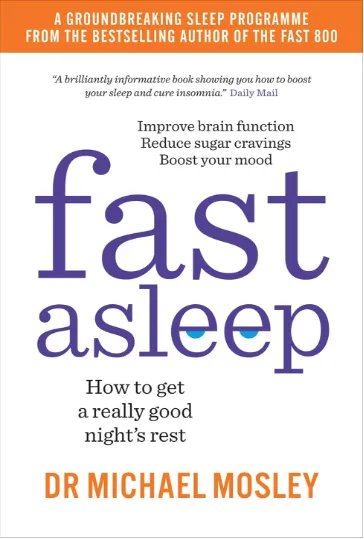
Fast Asleep: How to get a really good night's rest by Dr Michael Mosley
A good night's sleep is essential for a healthy brain and body. So why do so many of us struggle to sleep well? In Fast Asleep, Dr Michael Mosley explains what happens when we sleep, what triggers common sleep problems and why standard advice rarely works.
Prone to insomnia, he has taken part in numerous sleep experiments and tested every remedy going. The result is a radical, four-week programme, based on the latest science, designed to help you re-establish a healthy sleep pattern in record time.
With plenty of surprising recommendations - including tips for teenagers, people working night shifts and those prone to jet lag - plus recipes which will boost your deep sleep by improving your gut microbiome, Fast Asleep provides the tools you need to sleep better, reduce stress and feel happier.
We’re not just about overcoming obstacles, we’re about transforming lives.
Book Recommendation
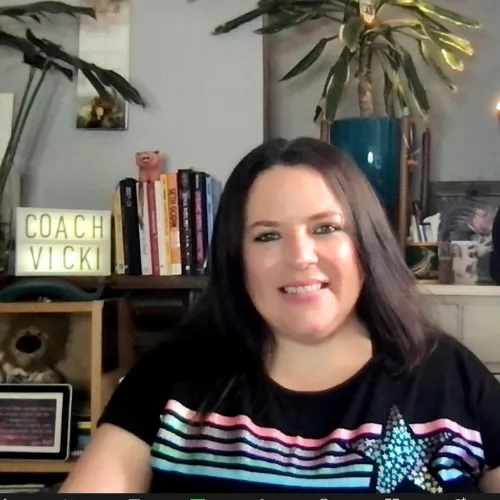
Victoria Canham - Performance and People Strategic Partner
Victoria Canham is a senior Performance and People Strategic Partner, working with executive leaders and organisations when performance, culture, relationships and emotional pressure collide. She is an ICF-accredited Professional Coach and the founder of Victoria Canham Consultancy, a specialist practice focused on strengthening leadership capability, resilience, psychological safety and organisational performance in the real world, not just on paper.
With a background in behavioural insight, leadership psychology and large-scale change, Victoria supports senior leaders navigating strained relationships, brittle cultures, team fatigue and high-pressure decision-making. Her work helps leadership teams stabilise, communicate more effectively, rebuild trust and operate with greater clarity, humanity and authority.
She partners with CEOs, senior leaders and HR to address what is actually happening beneath performance headlines, guiding organisations through the conversations and capability shifts they cannot safely or effectively manage internally. The result is stronger leadership, healthier cultures, more resilient teams, and organisations better equipped to perform sustainably.
Follow us on social media


💸 Your people don’t leave for money. 💣 They leave for culture. 🔧 I fix that. 🏆 Retention & performance strategy that works.
Book a ☎️ | Fix the Leaks


© Copyright 2026 Victoria Canham Coaching | Website built by Me on FEA Create (aff.)
Performance Coaching Reading, London, Berkshire, Oxford | St George's Road, Reading, Berkshire, United Kingdom, RG30 2RL | +44 7377 527 529 | [email protected] Open Monday to Friday 9 am until 5 pm