
The Culture Responsibility Leaders Have to Shoulder
Victoria Canham • 17 June 2026 • 4 min read
The Culture Responsibility Leaders Have to Shoulder
Victoria Canham • 17 June 2026 • 4 min read
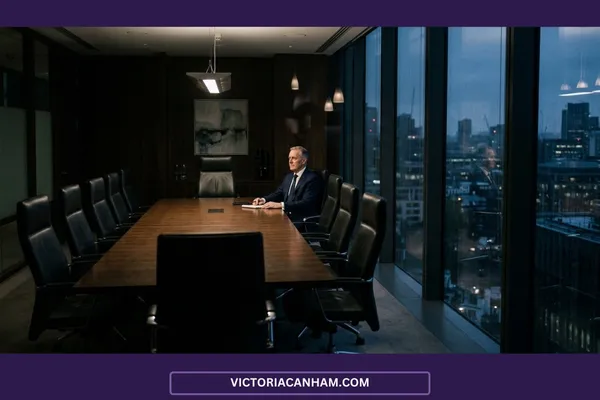
June Leadership Series · Part 3 of 4
There is a version of your organisation's culture that exists purely in the expensive documentation - the values statement, the engagement survey, the behaviour framework that HR spent six months developing and that was signed off at board level and printed on the wall near reception.
Then there is the version that actually exists, which truly shapes what people say in meetings, what they raise and what they do not raise, how risk is handled, how conflict is avoided, whether the truth gets spoken or managed.
That version is not shaped by the documents. It is shaped by the most senior person in the room, and specifically by their emotional state, their level of presence, and their tolerance for honesty on any given day.
This is the culture responsibility. It is the third responsibility in this series that senior leaders shoulder without having agreed to it, and it is the one that is most rarely highlighted.
What the Research Actually Shows
89% of managers believe their people are thriving, while only 24% of employees report that they actually are.
That gap does not exist because managers are deluded or dishonest. It exists because the experience of being led and the experience of leading are radically different things, and because the signals that would close the gap are not reaching the people who most need to receive them.
A reactive leader cannot create a safe team. That observation is precise and worth sitting with. The emotional state of the senior leader is not incidental to the team's experience. What the leader brings into the room, be it their stress levels, their openness to challenge, or their genuine versus performed belief in the direction, shapes the environment in which everyone else operates.
Teams are sophisticated readers of the people above them. They have to be. A senior leader's mood, their level of real engagement, whether they are actually listening or waiting for the conversation to end - these things affect daily reality in concrete ways. People learn the signals early, and they read them continuously. (Side note: I've worked with team members who said they could tell their manager's mood by the sound of their footsteps - they are paying attention to everything.)
When 89% of managers think things are fine but only 24% of employees agree, the gap is not primarily a communication problem. It is a perception problem that originates at the top.
The Responsibility Nobody Assigned You
Here is the specific thing that makes this something to shoulder rather than simply a responsibility.
The organisation expects the senior leader to regulate the culture, to be the emotional thermostat, to project confidence when things are uncertain, stability when things are volatile, and optimism when the numbers are not where they need to be.
Nobody wrote that in the job description or negotiated it as part of the remit. It accumulated because the alternative of a senior leader who lets their actual state show has consequences that organisations are not designed to absorb.
So leaders regulate. They manage what they project; they separate what they are experiencing from what they allow the organisation to see, and they hold the emotional weather of the business while presenting a version of themselves that the organisation can function around.
This is exhausting in a way that is difficult to quantify, because it is not a task. It does not appear on a to-do list or a performance review. It is simply the continuous background work of being the person everyone is reading.
The demand for social and emotional skills in organisations is expected to grow by 26% by 2030. That demand is not landing on the organisation's systems; it is going to land on the people at the top. The senior leader is expected to shoulder increasing emotional and cultural loads as the environment becomes more complex, more uncertain, and more anxious.
The expectation is rarely communicated.
The cost of not meeting it is significant.
What Happens When the Burden Gets Too Heavy
The first thing that happens is subtle and easy to miss. The leader's tolerance for difficulty narrows. They become less available for hard conversations, not because they have withdrawn but because the bandwidth is genuinely reduced. The team reads this accurately, adjusts, and stops raising the things that are difficult.
The second thing is that the adjustments become permanent. The team that stopped raising strategic challenges because the leader was too stretched to engage with them becomes, over time, a team that does not raise strategic challenges. The behaviour becomes the norm. The norm becomes the culture.
The third thing is the one that shows up in the engagement data. Culture initiatives that address conditions rather than the source of the problem, such as better benefits, updated values frameworks, more flexible working, address the symptom. They do not address the fact that the experience of being led is shaped by the actual state of the leader, and that when the leader is depleted, the culture depletes with them.
A FTSE 250 organisation saw a 30% drop in project velocity after three senior leaders burned out and exited. It took six months to stabilise. That is the measurable cost of the culture weight landing badly.
What This Requires From Organisations
The senior team is the culture. Development that does not start there is working in the wrong direction.
If engagement is falling, if retention of high performers is a problem, if the culture deck and Monday morning are describing two different organisations, the question is not what the environment needs to change. The question is what the most senior leaders are currently experiencing, and whether they have anywhere to take it.
Leaders regulate their teams' emotional experience because the organisation needs them to. The organisation rarely provides anything equivalent in return. No serious space to process. No honest conversation without consequence. No place to put the weight down for long enough to recalibrate.
The result is leaders carrying a regulatory function for the whole organisation while absorbing their own depletion in private.
That is a structural problem. Addressing it with a wellness programme or a resilience workshop mistakes the mechanism for the source.
What This Requires From Leaders
The culture responsibility cannot be relinquished entirely. It is real, it matters, and it belongs to the role in a way that the other responsibilties in this series do not entirely.
What can change is how it is borne.
A leader who knows they are the emotional thermostat of their organisation can make deliberate choices about what they bring into the room. They can create the conditions for honest signals to reach them, rather than managing upward indefinitely. They can separate what is theirs from what has been deposited by the organisation's anxiety.
None of that is possible without somewhere to release the emotional burden first. A space that is not managed, not filtered, not observed by the people whose daily experience depends on what the leader projects.
The organisation needs the senior leader to hold the culture; that is legitimate, but the senior leader needs somewhere safe too. The absence of that is the gap this piece is highlighting.
This is Part 3 of a four-part June Leadership series.
The Personal Burden — what gets deferred across a senior career, and what that deferral actually looks like when the invoice arrives.
If you are a senior leader bearing more than the role asked for, a confidential conversation is a good place to start.
♦️ Hi, I'm Victoria Canham. I work with senior leaders, executives, founders and organisations when performance, pressure and people dynamics reach a point where the usual tools stop working.
My work sits at the intersection of leadership psychology, organisational performance and culture reality. I help executive teams navigate strained relationships, cultural brittleness, emotional fatigue, and the quiet erosion of trust that most businesses prefer not to acknowledge.
This isn't "feel-good" leadership development. It is measured, commercially grounded support that builds capability, deepens emotional resilience, and helps leaders operate with greater clarity, strength and humanity.
♦️ How I support organisations and senior leaders:
Executive Advisory
I work alongside CEOs and senior leaders as a trusted, discreet thinking partner. We deal with the real conversations, the emotional load of leadership, decision-making under pressure, and the personal dynamics that affect performance and culture.
Leadership Facilitation & Development
I design high-level development that respects intelligence, emotional reality and commercial context. These programmes help leaders communicate better, hold difficult conversations safely, and lead in a way that is firm, clear and credible.
Culture, Performance & Retention Support
I help organisations stabilise culture and strengthen psychological safety in ways that shift behaviour and engagement — not just look impressive on a slide deck.
If your leadership team is under strain, if relationships feel tense, or if the culture is becoming brittle, it may be time for a different conversation.
Book a confidential call to talk openly, think clearly and work out what your organisation really needs. No theatrics. No fluffy platitudes. Just honest, expert partnership.
Follow me on LinkedIn for human, psychologically intelligent leadership that actually works in the real world.

Comment On This Article
Recommended Reading
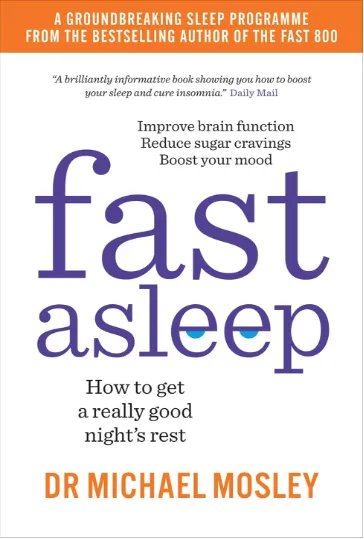
Fast Asleep: How to get a really good night's rest by Dr Michael Mosley
A good night's sleep is essential for a healthy brain and body. So why do so many of us struggle to sleep well? In Fast Asleep, Dr Michael Mosley explains what happens when we sleep, what triggers common sleep problems and why standard advice rarely works.
Prone to insomnia, he has taken part in numerous sleep experiments and tested every remedy going. The result is a radical, four-week programme, based on the latest science, designed to help you re-establish a healthy sleep pattern in record time.
With plenty of surprising recommendations - including tips for teenagers, people working night shifts and those prone to jet lag - plus recipes which will boost your deep sleep by improving your gut microbiome, Fast Asleep provides the tools you need to sleep better, reduce stress and feel happier.
We’re not just about overcoming obstacles, we’re about transforming lives.
Book Recommendation
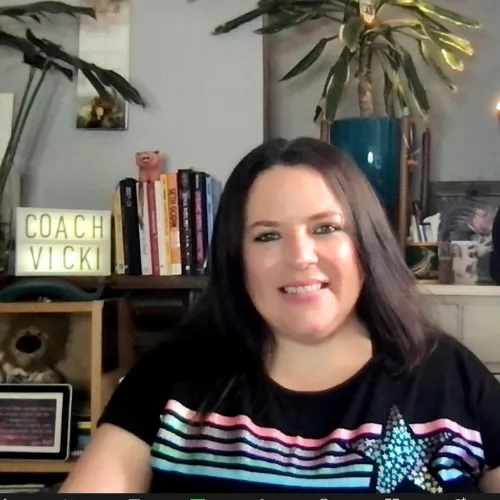
Victoria Canham - Performance and People Strategic Consultant
Victoria Canham works with executive leaders and organisations when performance, culture and emotional pressure collide.
She is a Change Leader with over 25 years of experience, an ICF-accredited Professional Coach and founder of Victoria Canham Consultancy. Her practice focuses on strengthening leadership capability and organisational performance in the real world, not just on paper.
With twenty-five years in talent development, behavioural insight and large-scale change, she supports senior leaders navigating strained relationships, brittle cultures and high-pressure decision-making. Her work helps leadership teams stabilise, rebuild trust and operate with greater clarity and authority.
She is brought in when organisations cannot safely hold difficult conversations internally—when executive teams have stopped saying what needs saying, when founders need to step back, when high-performing individuals are costing more than they deliver. She creates the conditions where those conversations can actually happen, and where organisations can move forward from them.
The result is leadership that functions under pressure, cultures that hold up in practice, and teams equipped to perform sustainably.
Follow us on social media


💸 Your people don’t leave for money. 💣 They leave for culture. 🔧 I fix that. 🏆 Retention & performance strategy that works.
Book a ☎️ | Fix the Leaks


© Copyright 2026 Victoria Canham Coaching | Website built by Me on FEA Create (aff.)
Performance Coaching Reading, London, Berkshire, Oxford | St George's Road, Reading, Berkshire, United Kingdom, RG30 2RL | +44 7377 527 529 | [email protected] Open Monday to Friday 9 am until 5 pm