
The Personal Toll of High-Stakes Responsibility
Victoria Canham • 24 June 2026 • 4 min read
The Culture Responsibility Leaders Have to Shoulder
Victoria Canham • 17 June 2026 • 4 min read
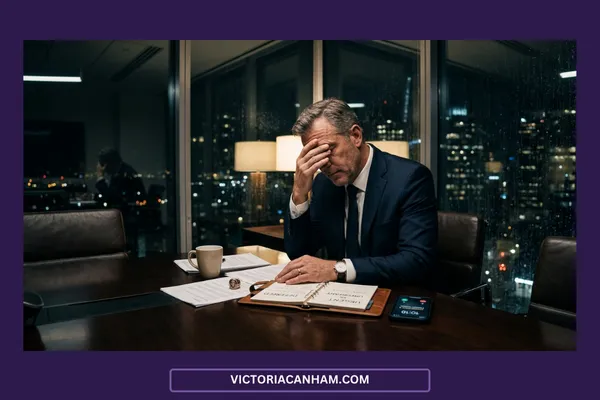
June Leadership Series · The Burdens of Leadership · Part 4 of 4
The June series has examined three responsibilities senior leaders become responsible for without having agreed to. The expectations that accumulated. The performance gaps the organisation deposits at the top. The emotional regulation that holds a culture together when nobody else is positioned to do it.
This final piece is about what all three of those things have been costing outside the role.
Let’s not be abstract about it; it is specifically the health appointment that has to be moved for the third time, the relationship that has been running on goodwill rather than attention, the version of you that exists outside the title, which you have been meaning to reconnect with once things calm down.
Things rarely calm down. That is the nature of the role.
The Mechanics of Deferral
Deferral does not feel like a decision when it happens; it feels logical.
The board meeting is genuinely more urgent than the dentist appointment this week. The deal that needs closing before you can take the weekend you promised your partner. The team crisis is real, and dealing with it now is obviously more important than the gym session, the dinner, the phone call you have been meaning to make.
Each individual deferral is reasonable, and individually, none of them constitutes a problem.
The issue is that the role does not stop producing urgent things. There will always be a board meeting, a deal, a crisis. If the rule is "deal with what's urgent first," the things that matter most personally never get dealt with. The personal things are rarely seen as urgent to the company in the way a P&L variance is urgent. They are simply important, and importance loses to urgency every time unless you intervene deliberately. *Defer your heart attack, we need to close this deal first*
Over a senior career, this produces a specific and predictable pattern. The things that truly matter most are the ones that get deferred most consistently, because they have no deadline attached and no immediate consequence.
What the Deferral Actually Contains
It is worth being precise about what gets deferred, because "work-life balance" is too vague a phrase to be useful.
Health. I don't mean crisis health, I mean the preventative kind. The check-up, the test, the symptom that gets noted and then not followed up on because there has not been a good week to deal with it. Senior leaders are disproportionately likely to discover health issues late, not because they lack access to care, but because accessing care requires time they have not protected.
Relationships. The erosion of relationships over time. The partner who has adjusted their expectations downward over the years because the alternative was constant disappointment. The friendships that dropped off, or shallowed, because showing up consistently was not possible and eventually stopped being expected. The children who got the tired version of you because the version with anything left over went to work first.
Identity outside the role. The interests, curiosities, and parts of yourself that existed before the title and have been steadily starved of attention, because they never had a deadline, and the inbox always did.
None of this announces itself as a crisis while it is happening. It accumulates the way debt accumulates: invisibly, until the size of it becomes impossible to ignore.
When the Bill Arrives
The bill for sustained deferral does not arrive gradually. It tends to arrive all at once, usually at a moment the role did not anticipate and cannot accommodate.
A health scare that did not have to be a scare if it had been caught nine months earlier. A relationship that reaches a point of genuine crisis because the erosion finally crossed a threshold. A moment, often late at night or on a long flight, when the question arrives uninvited: what was this actually for?
That question is the natural consequence of a career spent prioritising urgency over importance, for long enough that the importance went unaddressed for years.
The organisation that benefited from your availability during all those deferrals will not be the one paying this bill. It will be you, your health, your closest relationships, and the parts of your life that exist outside the role.
What Closing the Gap Actually Requires
This is not an argument for balance in the conventional sense, and it is not a suggestion that you simply work less. Senior roles are demanding. That will not change, and pretending otherwise is not useful.
What changes the pattern is deciding, in advance and deliberately, which things do not get deferred regardless of what else is competing for the time. Make it a rule, treated with the same seriousness as a board commitment.
This requires being honest about what has actually been deferred, rather than vaguely aware that "things have slipped." It requires being honest about the specific things that slipped, the appointment, the relationship, the part of yourself that has been waiting, and deciding which of them are no longer negotiable.
It also requires recognising that the capacity to do this well rarely develops by accident. Most senior leaders who have made it stick had somewhere to think this through properly, away from the role, with someone who could see the pattern clearly and was not invested in maintaining it.
Closing the Series
Across four pieces, the pattern has been consistent. Expectations that accumulated without agreement. Performance gaps absorbed by default. Cultural regulation provided without acknowledgement. Personal costs deferred without limit.
These are the predictable result of operating in roles that were never properly designed, in organisations that have not built the structures to support their own complexity, for long enough that the accumulated toll starts to feel normal.
It is not normal. It is simply common, which is a different thing.
The leaders who tolerate this well are not the ones who feel none of it. They are the ones who have stopped accepting it as default and started examining what is actually theirs, what belongs to the organisation, and what has simply been deferred for too long.
That examination is uncomfortable, however, it is the only way the burden gets lighter rather than heavier.
This is Part 4 of a four-part June leadership series focusing on the burdens of leadership. If any part of this series has resonated with you and needs further examination, a confidential conversation is where that examination starts.
♦️ Hi, I'm Victoria Canham. I work with senior leaders, executives, founders and organisations when performance, pressure and people dynamics reach a point where the usual tools stop working.
My work sits at the intersection of leadership psychology, organisational performance and culture reality. I help executive teams navigate strained relationships, cultural brittleness, emotional fatigue, and the quiet erosion of trust that most businesses prefer not to acknowledge.
This isn't "feel-good" leadership development. It is measured, commercially grounded support that builds capability, deepens emotional resilience, and helps leaders operate with greater clarity, strength and humanity.
♦️ How I support organisations and senior leaders:
Executive Advisory
I work alongside CEOs and senior leaders as a trusted, discreet thinking partner. We deal with the real conversations, the emotional load of leadership, decision-making under pressure, and the personal dynamics that affect performance and culture.
Leadership Facilitation & Development
I design high-level development that respects intelligence, emotional reality and commercial context. These programmes help leaders communicate better, hold difficult conversations safely, and lead in a way that is firm, clear and credible.
Culture, Performance & Retention Support
I help organisations stabilise culture and strengthen psychological safety in ways that shift behaviour and engagement — not just look impressive on a slide deck.
If your leadership team is under strain, if relationships feel tense, or if the culture is becoming brittle, it may be time for a different conversation.
Book a confidential call to talk openly, think clearly and work out what your organisation really needs. No theatrics. No fluffy platitudes. Just honest, expert partnership.
Follow me on LinkedIn for human, psychologically intelligent leadership that actually works in the real world.

Comment On This Article
Recommended Reading
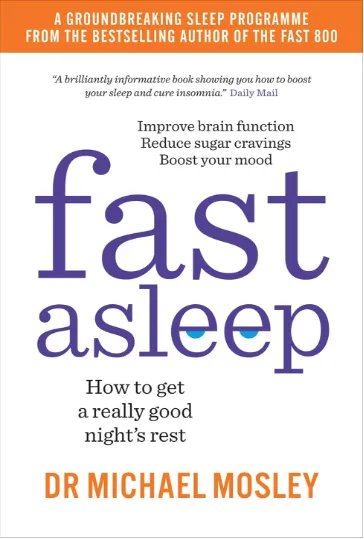
Fast Asleep: How to get a really good night's rest by Dr Michael Mosley
A good night's sleep is essential for a healthy brain and body. So why do so many of us struggle to sleep well? In Fast Asleep, Dr Michael Mosley explains what happens when we sleep, what triggers common sleep problems and why standard advice rarely works.
Prone to insomnia, he has taken part in numerous sleep experiments and tested every remedy going. The result is a radical, four-week programme, based on the latest science, designed to help you re-establish a healthy sleep pattern in record time.
With plenty of surprising recommendations - including tips for teenagers, people working night shifts and those prone to jet lag - plus recipes which will boost your deep sleep by improving your gut microbiome, Fast Asleep provides the tools you need to sleep better, reduce stress and feel happier.
We’re not just about overcoming obstacles, we’re about transforming lives.
Book Recommendation
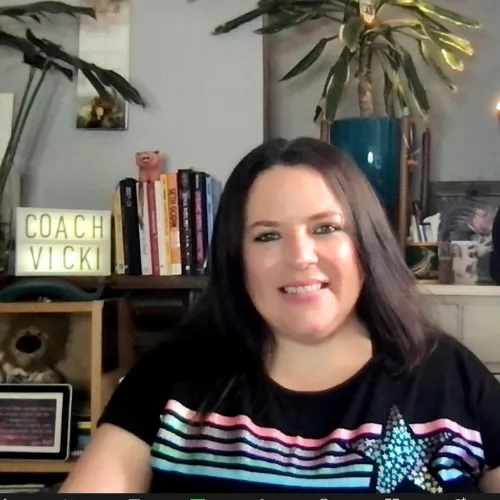
Victoria Canham - Performance and People Strategic Consultant
Victoria Canham works with executive leaders and organisations when performance, culture and emotional pressure collide.
She is a Change Leader with over 25 years of experience, an ICF-accredited Professional Coach and founder of Victoria Canham Consultancy. Her practice focuses on strengthening leadership capability and organisational performance in the real world, not just on paper.
With twenty-five years in talent development, behavioural insight and large-scale change, she supports senior leaders navigating strained relationships, brittle cultures and high-pressure decision-making. Her work helps leadership teams stabilise, rebuild trust and operate with greater clarity and authority.
She is brought in when organisations cannot safely hold difficult conversations internally—when executive teams have stopped saying what needs saying, when founders need to step back, when high-performing individuals are costing more than they deliver. She creates the conditions where those conversations can actually happen, and where organisations can move forward from them.
The result is leadership that functions under pressure, cultures that hold up in practice, and teams equipped to perform sustainably.
Follow us on social media


💸 Your people don’t leave for money. 💣 They leave for culture. 🔧 I fix that. 🏆 Retention & performance strategy that works.
Book a ☎️ | Fix the Leaks


© Copyright 2026 Victoria Canham Coaching | Website built by Me on FEA Create (aff.)
Performance Coaching Reading, London, Berkshire, Oxford | St George's Road, Reading, Berkshire, United Kingdom, RG30 2RL | +44 7377 527 529 | [email protected] Open Monday to Friday 9 am until 5 pm