
When Leaving Is the Most Responsible Leadership Decision You Can Make
Victoria Canham • 29 April 2026 • 6 min read

Staying too long has consequences for the business, for the people in it, and for you. Most leaders know when they’ve reached that point. Very few act on it.
At some point in a leadership tenure, the contribution shifts.
The leader who built the business is holding back the business that needs to scale.
The executive who stabilised the organisation is now the reason it can’t move fast enough. The founder whose conviction drove the early years is the person the board is working around in the later ones. The decisions that used to be instinctive are now forced. The energy required to show up fully is higher than it used to be, and the results are starting to reflect it.
This is not unusual. It happens to capable, experienced, self-aware leaders. The question is what they do when they recognise it.
Why Leaders Stay Longer Than They Should
Identity is the main reason. For founders especially, the business and the self are entangled in ways that make separation feel like erasure. Leaving isn’t experienced as a professional transition; instead, it registers as a loss of who you are. The title, the authority, the external recognition, and the daily sense of consequence are central to how many senior leaders understand themselves.
There is also the sunk cost of years invested, sacrifices made, and the version of the future that was supposed to justify it all. Leaving before that version arrives feels like admitting the investment didn’t pay off.
There is also straightforward fear. Fears of what comes next, of who you are outside the role, of whether the thing you’ve built will survive without you, or whether it will thrive, which in some ways is harder to reconcile.
What Staying Costs
When a leader stays past the point where they’re the right person for the role, the organisation is the first to pay the price.
Decisions slow down, or are made badly. Talented people, particularly those with options, leave or stop contributing at full capacity. The leadership team focuses on managing the situation rather than running the business. Strategy becomes constrained by what the current leader is willing or able to do, rather than what the business actually needs.
These costs accumulate gradually, which is exactly why they’re easy to miss or rationalise. There is no single moment where staying becomes the wrong decision; instead, it is built on a slow erosion, visible to almost everyone except the person at the centre of it.
The leader pays too. The role starts to require more effort for diminishing returns. The work that used to be energising becomes draining, and the conviction that drove early decisions gets replaced by a weariness that shows up whether or not you intend it to. You can sustain that for a period. You cannot sustain it indefinitely, and the people around you will notice it before you acknowledge it.
The Misalignment
Misalignment between a leader and a role takes several forms, and not all of them are always obvious.
Sometimes it’s a skills gap where the business has moved into a phase that requires a different kind of leadership than the one you provide. Sometimes it’s a values gap where the direction the board or the market is pushing towards requires compromises you’re no longer willing to make. Sometimes it’s a contribution gap where you’re doing the job adequately, but someone else would do it significantly better, and you know it.
Each of these is a legitimate basis for leaving. Senior leaders tend to accept the first more readily than the second or third. Acknowledging a skills gap feels tolerable, while acknowledging a values gap means admitting the organisation has moved somewhere you don’t want to go, and acknowledging a contribution gap means choosing the business over your own continuity.
That last one is where integrity becomes expensive for the individual, but ignoring it is costly for the organisation.
What Makes An Exit a Leadership Act
An exit is a leadership act when it’s taken deliberately, based on a clear-eyed assessment of the situation, before circumstances force it.
This means knowing why you’re leaving, specifically, not theoretically. It means timing the transition to give the organisation the best chance of continuity. It means investing in whoever comes next rather than undermining them, formally or otherwise. It means leaving the role in better shape than a forced exit would allow.
It also means being honest with yourself about the difference between leaving because it’s right and leaving because it’s easier. Exiting a role where you’re uncomfortable, under-supported, or compromised is responsible. Using the language of principled departure to exit a situation you’ve decided is too hard is something different.
The Personal Cost
Choosing to leave a senior role, particularly one you built or have held for a long time, has a personal cost that is separate from the professional one.
The structure that the role provided, including the rhythm of the week, the clarity of purpose, and the social architecture of the organisation, disappears. The identity that was attached to the title requires acknowledgement and adjustment. The relationships that existed because of the role shift ended, maybe never to recover. This is true even when the decision was right and you chose it yourself.
Leaders who handle this well treat the transition as a distinct phase requiring its own attention, rather than a gap between roles to be minimised. They give themselves time to recalibrate before committing to the next thing. They are selective about advice from people who are uncomfortable with their uncertainty and want them moving again quickly.
The Constraint
Recognising misalignment and acting on it are two different things. The gap between them is where most leaders spend longer than they should.
Acting on it has a price: the identity disruption, the financial recalibration, the professional uncertainty, the personal cost of admitting that a chapter has ended. These impacts are very real and should be taken seriously.
Staying also has a price: the slow erosion of your contribution, the compounding cost to the organisation, the impact on the people who are working around you, not just with you, the insider knowledge that you’re just holding on rather than leading.
Integrity has a price, but so does its absence. The leaders who navigate this well are the ones who do the audit honestly and act on what the results say.
This is Part 5 of a five-part April series on leadership, constraint, and consequence. Read the full series at the link below.
♦️ Hi, I'm Victoria Canham. I work with senior leaders, executives, founders and organisations when performance, pressure and people dynamics reach a point where the usual tools stop working.
My work sits at the intersection of leadership psychology, organisational performance and culture reality. I help executive teams navigate strained relationships, cultural brittleness, emotional fatigue, and the quiet erosion of trust that most businesses prefer not to acknowledge.
This isn't "feel-good" leadership development. It is measured, commercially grounded support that builds capability, deepens emotional resilience, and helps leaders operate with greater clarity, strength and humanity.
♦️ How I support organisations and senior leaders:
Executive Advisory
I work alongside CEOs and senior leaders as a trusted, discreet thinking partner. We deal with the real conversations, the emotional load of leadership, decision-making under pressure, and the personal dynamics that affect performance and culture.
Leadership Facilitation & Development
I design high-level development that respects intelligence, emotional reality and commercial context. These programmes help leaders communicate better, hold difficult conversations safely, and lead in a way that is firm, clear and credible.
Culture, Performance & Retention Support
I help organisations stabilise culture and strengthen psychological safety in ways that shift behaviour and engagement — not just look impressive on a slide deck.
If your leadership team is under strain, if relationships feel tense, or if the culture is becoming brittle, it may be time for a different conversation.
Book a confidential call to talk openly, think clearly and work out what your organisation really needs. No theatrics. No fluffy platitudes. Just honest, expert partnership.
Follow me on LinkedIn for human, psychologically intelligent leadership that actually works in the real world.

Comment On This Article
Recommended Reading
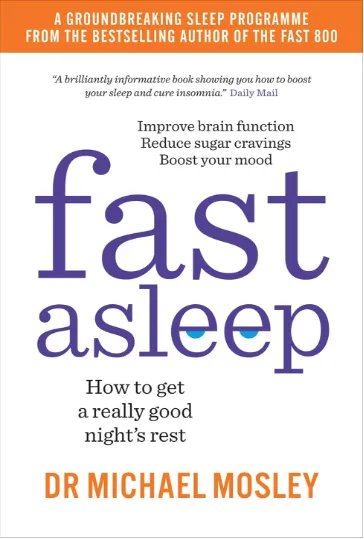
Fast Asleep: How to get a really good night's rest by Dr Michael Mosley
A good night's sleep is essential for a healthy brain and body. So why do so many of us struggle to sleep well? In Fast Asleep, Dr Michael Mosley explains what happens when we sleep, what triggers common sleep problems and why standard advice rarely works.
Prone to insomnia, he has taken part in numerous sleep experiments and tested every remedy going. The result is a radical, four-week programme, based on the latest science, designed to help you re-establish a healthy sleep pattern in record time.
With plenty of surprising recommendations - including tips for teenagers, people working night shifts and those prone to jet lag - plus recipes which will boost your deep sleep by improving your gut microbiome, Fast Asleep provides the tools you need to sleep better, reduce stress and feel happier.
We’re not just about overcoming obstacles, we’re about transforming lives.
Book Recommendation

Victoria Canham - Performance and People Strategic Consultant
Victoria Canham works with executive leaders and organisations when performance, culture and emotional pressure collide.
She is a Change Leader with over 25 years of experience, an ICF-accredited Professional Coach and founder of Victoria Canham Consultancy. Her practice focuses on strengthening leadership capability and organisational performance in the real world, not just on paper.
With twenty-five years in talent development, behavioural insight and large-scale change, she supports senior leaders navigating strained relationships, brittle cultures and high-pressure decision-making. Her work helps leadership teams stabilise, rebuild trust and operate with greater clarity and authority.
She is brought in when organisations cannot safely hold difficult conversations internally—when executive teams have stopped saying what needs saying, when founders need to step back, when high-performing individuals are costing more than they deliver. She creates the conditions where those conversations can actually happen, and where organisations can move forward from them.
The result is leadership that functions under pressure, cultures that hold up in practice, and teams equipped to perform sustainably.
Follow us on social media


💸 Your people don’t leave for money. 💣 They leave for culture. 🔧 I fix that. 🏆 Retention & performance strategy that works.
Book a ☎️ | Fix the Leaks


© Copyright 2026 Victoria Canham Coaching | Website built by Me on FEA Create (aff.)
Performance Coaching Reading, London, Berkshire, Oxford | St George's Road, Reading, Berkshire, United Kingdom, RG30 2RL | +44 7377 527 529 | [email protected] Open Monday to Friday 9 am until 5 pm