The Leadership Fade
Victoria Canham • 5 August 2026 • 3 min read
The Culture Responsibility Leaders Have to Shoulder
Victoria Canham • 17 June 2026 • 4 min read

The September Reset · Part 1 of 4
But it’s August, Vicki, why are we talking about September? I hear you, but here in Europe, many people are on their long summer holiday and that is the best time to reset. In the Southern Hemisphere, it makes sense to reset in December for a fresh start in January, because Christmas break is their summer holiday.
We talk frequently about burnout and some even wear it as a badge of honour, but in reality leadership depletion does not look like burnout from the outside. The diary is full, the deliverables are landing, the meetings are being run, so every external metric shows this leader is functioning, probably even high functioning.
This completely ignores what is happening internally for this leader and we have to acknowledge that perhaps, internally, something has gone.
The energetic leader that used to ramp up further with the work has started to force it instead of genuinely feeling energised and excited. The belief in the direction is still expressed, but it is expressed the way a professional expresses things, not the way a person who actually believes them does. Decisions are being made, but with less of the quality of attention they deserve, because that quality of attention has been running on deficit for longer than anyone has formally acknowledged. Your leader has started simply going through the motions.
This is the Leadership Fade. It is not burnout. Yet. It arrives before burnout, and it is considerably more common. It is the slow withdrawal of the person from the role, while they continue to cover it entirely adequately.
What It Actually Feels Like
The difficulty with highlighting the Leadership Fade is that it isn’t actually that easy to define and pointing out some of the falling metrics feels petty, because you're not dealing with seismic changes or consequences.
Rather than a massive moment when it all breaks, you might notice symptoms, or even feel a gradual flattening of performance. The work that used to produce genuine excellence starts to produce satisfactory instead. The version of yourself that you bring to the job on a Thursday afternoon in a difficult quarter is noticeably different from the version you brought three years ago, and you are aware of the difference, but you don’t know how to even begin to talk about it, never mind resolve it.
Physically, the signs are there if anyone is paying attention, which most senior leaders are not, because paying attention to their own physical state competes with everything else that is more immediately urgent. Health, sleep, exercise all deferred for company deadlines and plans that have no time for you, often leading to a reliance on things that take the edge off at the end of the day (if you can wait that long) that has suddenly become more load-bearing than it used to be. Your energy starts to tank in the middle of the week and no longer responds to caffeine, no matter how much more you add to your day.
I know none of these is a crisis individually, but together, they describe a person who has been drawing on reserves for long enough that the reserves themselves have diminished.
Why It Happens to the Best Leaders Specifically
The Leadership Fade does not target the least capable or the least committed. It targets the most capable and the most committed, precisely because those are the leaders who take on the most, give up the most, and are the least likely to speak up about what is happening to them before it has been happening for a very long time.
87% of mid-level and senior leaders report experiencing burnout symptoms at least weekly, yet only 50% say their organisation supports their mental wellbeing. That is a culture failure, and yet organisations still expect the best from their people, while not giving them the best in return.
Senior leaders are selected for resilience, for reliability under pressure, for being the person who holds things together when others are struggling. That selection creates a specific and largely unexamined pressure: the person who holds things together for everyone else has nowhere to unload the burden themselves, so they keep carrying it. Putting it down feels unconscionable and the wrong signal to send.
The fade is the result of feeling like the additional burden has just become a permanent condition of the role.
Why Summer Is the Right Moment to Address It
Most senior leaders will take some version of a break in August. They will feel better within days, and they will attribute that improvement to rest. The more significant part is the temporary removal of the accumulated responsibilities that the role produces every single week.
The mistake is treating that improvement as a reset rather than as the evidence that not everything is fine. That reset is what fine actually feels like, and shows how far the ordinary working state has drifted from it.
That gap between the person on holiday and the person who will walk back into the office in September is distinct and highlights the distance between your current operating state and the one you are capable of maintaining. It is also, if used deliberately, the most useful piece of information available to you before September arrives.
The leaders who come back from summer in a genuinely better state than they left are not the ones who rested the most; they are the ones who used the clarity gained to review what they are returning to and decide what will be different, before defaulting to business as usual. Business as usual is not always business at best.
What Turning It Around Actually Requires
The Leadership Fade is not resolved through rest alone, though rest is the prerequisite for everything else. It is resolved through an honest review of what caused it, which requires brutal honesty and introspection from the senior leaders.
The leader needs to review the gap between what the role and what is now required to do it fully. It requires identifying the patterns that were causing the fade before the holiday and will continue to cause it after, unless something changes urgently.
Finally, the leader needs a safe container in which to think and talk it through properly. Somewhere unrelated to the organisation, with someone who can help you examine it honestly.
August is the window for that examination. September is when the window closes and the status quo resumes. It is important to do it before the status quo arrives.
If you are reading this and recognising yourself in it, it is worth acting on it before September arrives. Book a confidential conversation with Victoria Canham.
This is Part 1 of a four-part August series: The September Reset. Next: why the leaders who plan in August have better Septembers — and what that planning actually involves.
♦️ Hi, I'm Victoria Canham. I work with senior leaders, executives, founders and organisations when performance, pressure and people dynamics reach a point where the usual tools stop working.
My work sits at the intersection of leadership psychology, organisational performance and culture reality. I help executive teams navigate strained relationships, cultural brittleness, emotional fatigue, and the quiet erosion of trust that most businesses prefer not to acknowledge.
This isn't "feel-good" leadership development. It is measured, commercially grounded support that builds capability, deepens emotional resilience, and helps leaders operate with greater clarity, strength and humanity.
♦️ How I support organisations and senior leaders:
Executive Advisory
I work alongside CEOs and senior leaders as a trusted, discreet thinking partner. We deal with the real conversations, the emotional load of leadership, decision-making under pressure, and the personal dynamics that affect performance and culture.
Leadership Facilitation & Development
I design high-level development that respects intelligence, emotional reality and commercial context. These programmes help leaders communicate better, hold difficult conversations safely, and lead in a way that is firm, clear and credible.
Culture, Performance & Retention Support
I help organisations stabilise culture and strengthen psychological safety in ways that shift behaviour and engagement — not just look impressive on a slide deck.
If your leadership team is under strain, if relationships feel tense, or if the culture is becoming brittle, it may be time for a different conversation.
Book a confidential call to talk openly, think clearly and work out what your organisation really needs. No theatrics. No fluffy platitudes. Just honest, expert partnership.
Follow me on LinkedIn for human, psychologically intelligent leadership that actually works in the real world.

Comment On This Article
Recommended Reading
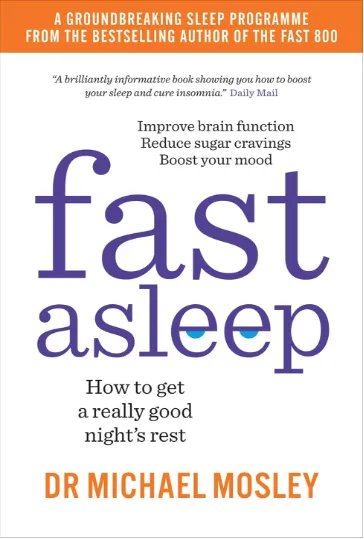
Fast Asleep: How to get a really good night's rest by Dr Michael Mosley
A good night's sleep is essential for a healthy brain and body. So why do so many of us struggle to sleep well? In Fast Asleep, Dr Michael Mosley explains what happens when we sleep, what triggers common sleep problems and why standard advice rarely works.
Prone to insomnia, he has taken part in numerous sleep experiments and tested every remedy going. The result is a radical, four-week programme, based on the latest science, designed to help you re-establish a healthy sleep pattern in record time.
With plenty of surprising recommendations - including tips for teenagers, people working night shifts and those prone to jet lag - plus recipes which will boost your deep sleep by improving your gut microbiome, Fast Asleep provides the tools you need to sleep better, reduce stress and feel happier.
We’re not just about overcoming obstacles, we’re about transforming lives.
Book Recommendation
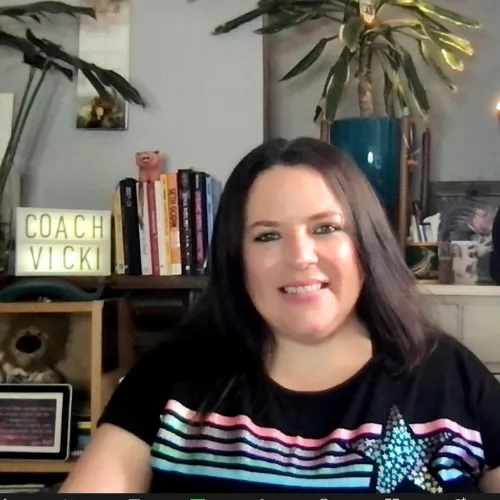
Victoria Canham - Performance and People Strategic Consultant
Victoria Canham works with executive leaders and organisations when performance, culture and emotional pressure collide.
She is a Change Leader with over 25 years of experience, an ICF-accredited Professional Coach and founder of Victoria Canham Consultancy. Her practice focuses on strengthening leadership capability and organisational performance in the real world, not just on paper.
With twenty-five years in talent development, behavioural insight and large-scale change, she supports senior leaders navigating strained relationships, brittle cultures and high-pressure decision-making. Her work helps leadership teams stabilise, rebuild trust and operate with greater clarity and authority.
She is brought in when organisations cannot safely hold difficult conversations internally—when executive teams have stopped saying what needs saying, when founders need to step back, when high-performing individuals are costing more than they deliver. She creates the conditions where those conversations can actually happen, and where organisations can move forward from them.
The result is leadership that functions under pressure, cultures that hold up in practice, and teams equipped to perform sustainably.
Follow us on social media


💸 Your people don’t leave for money. 💣 They leave for culture. 🔧 I fix that. 🏆 Retention & performance strategy that works.
Book a ☎️ | Fix the Leaks


© Copyright 2026 Victoria Canham Coaching | Website built by Me on FEA Create (aff.)
Performance Coaching Reading, London, Berkshire, Oxford | St George's Road, Reading, Berkshire, United Kingdom, RG30 2RL | +44 7377 527 529 | [email protected] Open Monday to Friday 9 am until 5 pm