Nearly 80% of Your Leadership Hires Are Already Failing
Victoria Canham • 8 July 2026 • 4 min read
The Culture Responsibility Leaders Have to Shoulder
Victoria Canham • 17 June 2026 • 4 min read
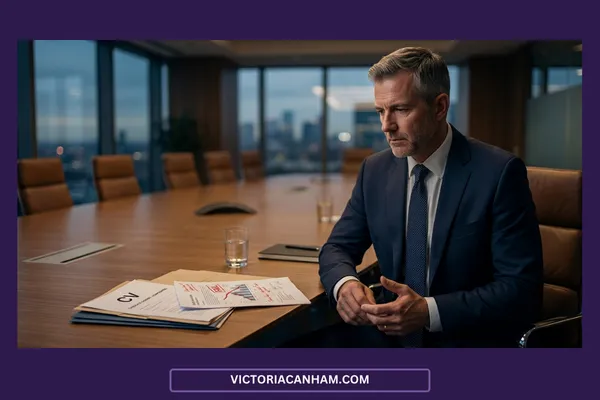
July Leadership Series · The People Strategy Reckoning. Part 2 of 5.
Nearly 80% of leadership selections do not meet expectations. That figure applies in organisations with structured interview panels, psychometric assessments, competency frameworks, and HR teams who are competent at their jobs and working hard to fill roles correctly.
This is a measurement failure, and it is happening because organisations are assessing leadership candidates for the wrong things entirely.
What Is Usually Tested and What Actually Matters
A mid-level hire can succeed largely through technical competence. A leader succeeds or fails based on judgement under pressure, behaviour when things go wrong, and the ability to influence people whose buy-in determines whether strategy becomes reality or stays on a slide deck.
Most leadership hiring processes are built to assess the first kind of success and applied to the second kind of role. Credentials, presentation, the right answers to predictable questions, a CV with recognisable company names on it. None of this is irrelevant, but none of it predicts whether someone can lead a team through a restructure, hold a difficult conversation with a peer, or maintain clarity when the organisation is buckling under strain.
The pressure to fill roles fast compounds the problem. The vacancy has been open too long. The team needs direction. Stakeholders want certainty. Under that kind of pressure, filling the role starts to feel more important than filling it correctly. Concerns that surfaced during the process get filed under "they will figure it out once they are settled." They rarely do, because the things that gave the panel pause tend to be precisely the things that define the failure eighteen months later.
What Actually Predicts Whether a Senior Leader Will Succeed
Leadership success is determined by behaviour under real pressure, judgement when the stakes are high, and fit with the specific context the person will be operating in. A standard interview captures none of these things reliably, because a standard interview is precisely the kind of controlled, low-stakes environment in which almost anyone can present well.
What predicts leadership success is closer to evidence than presentation. How has this person actually behaved when something went seriously wrong? What did they do when a team member was underperforming, and the straightforward option was to avoid the conversation? How did they handle a decision where every available course of action had a real cost, and how did the people around them experience that process?
This evidence rarely surfaces in a conventional hiring process, because conventional processes are not designed to surface it. They are designed to assess presentation, and presentation is a weak predictor of how someone will actually lead when the organisation needs them most.
What This Means for the Next Hire
Adding more interview rounds to the existing process may seem logical to give more confidence that the right decision is being made. However, it is placing the focus on the wrong signals, not providing better information about the right one. The fix is changing what is assessed, not increasing the volume of the same assessment.
That means replacing generic behavioural questions with specific, evidenced accounts of how this person has led under conditions that resemble the ones they will actually face.
It means bringing in someone who can read leadership behaviour accurately, rather than relying solely on a panel that is, understandably, more comfortable evaluating competence than character. It means being willing to slow the process down at the point where it most wants to speed up, which is when a credible candidate is in front of you, and the vacancy feels like it has already been open for too long.
The organisations getting this right are not the ones with the most sophisticated assessment tools. They are the ones with the discipline to assess what actually matters, even when the pressure to move fast is significant.
This is Part 2 of a five-part series: The People Strategy Reckoning.
Next: you are hiring for the job description. You should be hiring for the culture you actually have.
If your leadership hires keep producing the same outcome regardless of who you appoint, the pattern is worth examining properly. Book a confidential conversation.
♦️ Hi, I'm Victoria Canham. I work with senior leaders, executives, founders and organisations when performance, pressure and people dynamics reach a point where the usual tools stop working.
My work sits at the intersection of leadership psychology, organisational performance and culture reality. I help executive teams navigate strained relationships, cultural brittleness, emotional fatigue, and the quiet erosion of trust that most businesses prefer not to acknowledge.
This isn't "feel-good" leadership development. It is measured, commercially grounded support that builds capability, deepens emotional resilience, and helps leaders operate with greater clarity, strength and humanity.
♦️ How I support organisations and senior leaders:
Executive Advisory
I work alongside CEOs and senior leaders as a trusted, discreet thinking partner. We deal with the real conversations, the emotional load of leadership, decision-making under pressure, and the personal dynamics that affect performance and culture.
Leadership Facilitation & Development
I design high-level development that respects intelligence, emotional reality and commercial context. These programmes help leaders communicate better, hold difficult conversations safely, and lead in a way that is firm, clear and credible.
Culture, Performance & Retention Support
I help organisations stabilise culture and strengthen psychological safety in ways that shift behaviour and engagement — not just look impressive on a slide deck.
If your leadership team is under strain, if relationships feel tense, or if the culture is becoming brittle, it may be time for a different conversation.
Book a confidential call to talk openly, think clearly and work out what your organisation really needs. No theatrics. No fluffy platitudes. Just honest, expert partnership.
Follow me on LinkedIn for human, psychologically intelligent leadership that actually works in the real world.

Comment On This Article
Recommended Reading
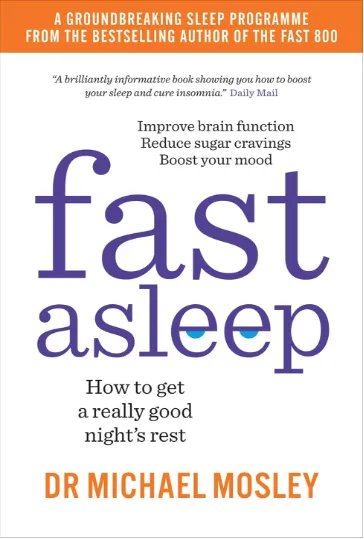
Fast Asleep: How to get a really good night's rest by Dr Michael Mosley
A good night's sleep is essential for a healthy brain and body. So why do so many of us struggle to sleep well? In Fast Asleep, Dr Michael Mosley explains what happens when we sleep, what triggers common sleep problems and why standard advice rarely works.
Prone to insomnia, he has taken part in numerous sleep experiments and tested every remedy going. The result is a radical, four-week programme, based on the latest science, designed to help you re-establish a healthy sleep pattern in record time.
With plenty of surprising recommendations - including tips for teenagers, people working night shifts and those prone to jet lag - plus recipes which will boost your deep sleep by improving your gut microbiome, Fast Asleep provides the tools you need to sleep better, reduce stress and feel happier.
We’re not just about overcoming obstacles, we’re about transforming lives.
Book Recommendation
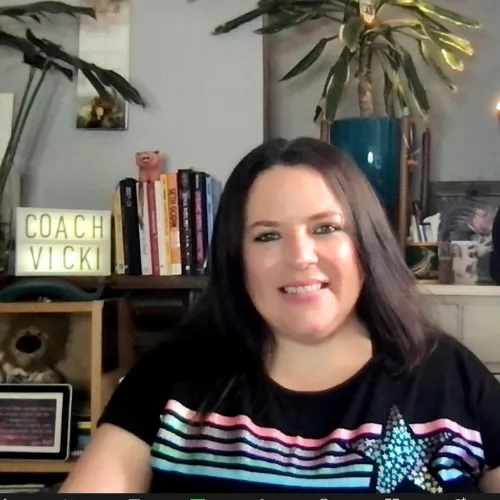
Victoria Canham - Performance and People Strategic Consultant
Victoria Canham works with executive leaders and organisations when performance, culture and emotional pressure collide.
She is a Change Leader with over 25 years of experience, an ICF-accredited Professional Coach and founder of Victoria Canham Consultancy. Her practice focuses on strengthening leadership capability and organisational performance in the real world, not just on paper.
With twenty-five years in talent development, behavioural insight and large-scale change, she supports senior leaders navigating strained relationships, brittle cultures and high-pressure decision-making. Her work helps leadership teams stabilise, rebuild trust and operate with greater clarity and authority.
She is brought in when organisations cannot safely hold difficult conversations internally—when executive teams have stopped saying what needs saying, when founders need to step back, when high-performing individuals are costing more than they deliver. She creates the conditions where those conversations can actually happen, and where organisations can move forward from them.
The result is leadership that functions under pressure, cultures that hold up in practice, and teams equipped to perform sustainably.
Follow us on social media


💸 Your people don’t leave for money. 💣 They leave for culture. 🔧 I fix that. 🏆 Retention & performance strategy that works.
Book a ☎️ | Fix the Leaks


© Copyright 2026 Victoria Canham Coaching | Website built by Me on FEA Create (aff.)
Performance Coaching Reading, London, Berkshire, Oxford | St George's Road, Reading, Berkshire, United Kingdom, RG30 2RL | +44 7377 527 529 | [email protected] Open Monday to Friday 9 am until 5 pm