
Closing the Gap: How to Rebuild Credibility and See Clearly
Victoria Canham • 17 December 2025 • 8 min read
Over the past two1, 2 weeks, we've explored why leaders have perception gaps and what behavioural signals reveal when words won't.
Now comes the hardest part: What do you actually do about it?
I know seeing your blindspots isn't comfortable, and recognising that there's a significant gap between what you believe is happening and what your team experiences can be confronting, even devastating.
However, awareness without action just creates informed frustration.
This article is about transformation, the specific practices and behaviours that close perception gaps, rebuild credibility, and create the conditions where truth can surface safely.
Not theory, nor aspirational platitudes.
Practical approaches that work, based on years of supporting leaders through exactly this journey.
Truth Bombs First
You can't close a perception gap quickly.
If your team has learned over months or years that certain things aren't safe to say or do around you, they won't unlearn that overnight because you suddenly want them to.
Trust is built slowly. It's rebuilt even more slowly.
The behaviours that created the gap happened over time. The behaviours that close it will also take time.
This isn't a quick fix. It's a transformation of how you show up, how you respond, and what you make safe.
It is, however, not impossible. I've watched leaders close significant perception gaps. The ones who succeed share common characteristics:
✳️ They accept the gap exists (even when it's painful)
✳️ They commit to changing their own behaviour first
✳️ They understand that rebuilding trust takes consistency, not perfection
✳️ They stay committed even when progress feels slow
If you're willing to do that work, this is how.
Practice 1: Name What You're Seeing
The first step is counterintuitive: make the gap visible.
Most leaders, once they recognise they have a perception gap, want to fix it quietly. They don't want to admit to their team that they've been missing things or that there's been a disconnect.
This is a mistake.
Your team already knows the gap exists because they live it every day. Pretending it's not there or trying to fix it without acknowledging it just creates more distance.
What this looks like in practice
In your next team meeting, say something like:
"I've been doing some reflection, and I've realised there might be a gap between what I think is happening in our team and what you're actually experiencing. I think I've been missing some signals, and I want to change that. Over the next few months, I'm going to be working on being more aware and more approachable. I'm not going to get it perfect, but I'm committed to closing this gap."
Why this works:
✳️ It demonstrates vulnerability and self-awareness
✳️ It gives your team permission to believe change might be possible
✳️ It sets expectations (it's a process, not an instant transformation)
✳️ It signals that you're taking ownership
What happens next:
Nothing dramatic, probably. Your team will wait to see if you actually change or if this was just words.
That's okay. You're not looking for immediate trust, because you have to first lay the groundwork.
Practice 2: Make Your Thinking Visible
Remember Signal 10 from last week - How people interpret your silence, pauses, and facial expressions through the lens of power and risk?
The solution is to narrate your internal process out loud.
Instead of: [Pause while you think]
Say: "I'm pausing because I'm thinking about how to answer that, not because I disagree."
Instead of: [Moving on to next agenda item]
Say: "I'm moving on because we're short on time, not because this isn't important. Let's come back to it."
Instead of: [Neutral face while processing]
Say: "I'm processing what you said. I'm concerned about implementation, but I like the core idea. Let me think about this and get back to you."
Why this works:
It removes the guesswork. Your team isn't interpreting your silence anymore, because you're telling them what it means.
Yes, it feels strange at first, as if you're explaining yourself, constantly. What feels redundant to you is often essential clarity for people who are used to interpreting your behaviour through a lens of risk.
Practice 3: The Response Ritual
How you respond in critical moments teaches your team what's really safe.
Someone brings you bad news, a mistake, or a challenge to your thinking. Your response in that moment matters more than any open-door policy or values statement.
Create a consistent response ritual:
Step 1: Pause Count to three. Let your defensive reaction pass. Your first instinct is often self-protective—don't act on it.
Step 2: Thank "Thank you for bringing this to me." Every time, even when the news is terrible.
Step 3: Seek to understand "Help me understand what happened." Not "why did this happen" (implies blame). Not "who's responsible" (triggers defensiveness). Just understand.
Step 4: Collaborate "What do you think we should do?" or "What support do you need?" Invite their thinking before imposing yours.
Why this works:
Consistency creates predictability. When people know how you'll respond, the risk calculation changes. The response stops being "I don't know what will happen" and becomes "I know I'll be heard."
Practice 4: Actively Invite Dissent
Waiting for people to speak up isn't enough when they've learned it's risky. You have to actively create safety.
In meetings, use explicit invitations:
✳️ "What am I missing here?"
✳️ "Who sees this differently?"
✳️ "What concerns aren't we voicing?"
✳️ "If you were going to argue against this decision, what would you say?"
✳️ "What could go wrong that we're not discussing?"
Then, critically, wait.
Don't fill the silence. Don't answer your own question. Don't move on after three seconds.
Count to ten. Twenty if you have to. Someone will speak.
Why this works:
You've made dissent the requested response, not the risky one. You've shifted from "I hope someone speaks up" to "I'm explicitly asking for different perspectives."
Practice 5: Separate Person from Position
When someone challenges your thinking or brings you difficult information, your response must clearly separate the person from the position.
Bad response: "I hear you, but..." [proceeds to explain why they're wrong]
Why it fails: "I hear you, but" signals "I'm not actually listening, I'm just waiting to correct you."
Better response: "I appreciate you raising that. Here's what I'm thinking... [your perspective]. Help me understand where our thinking diverges."
Best response: "That's a perspective I hadn't considered. Give me some time to think about this. Can we revisit it in our one-on-one?"
Why this works:
You're showing that challenging you doesn't damage the relationship. The person who disagreed isn't "difficult" or "not a team player"—they're someone who gave you valuable input.
Practice 6: Address Patterns Explicitly
When you notice the signals from Article 2, name them.
Examples:
If you notice hedging language: "I've noticed people apologising before asking questions. I want to be clear: questions are welcome here, no apology needed. In fact, I appreciate them."
If you notice uneven voice distribution: "I'm seeing a pattern where the same voices dominate our discussions. I want to hear from people who haven't spoken yet. [Name], what's your take?"
If you notice the meeting-after-the-meeting: "I sense there are concerns that aren't being voiced in this space. What would make it safer to share them here?"
Why this works:
You're making visible what everyone already knows exists. And you're signalling you're working to change it.
Practice 7: Repair When You Mess Up
You will mess up. You'll get defensive. You'll respond poorly to challenge. You'll move on too quickly from someone's concern.
The question isn't whether you'll make mistakes. It's what you do after you do.
When you catch yourself responding poorly:
Go back to the person (privately, if possible).
"I've been thinking about how I responded when you raised that concern yesterday. I was defensive, and that wasn't fair to you. You were bringing me important information, and I should have received it better. Thank you for raising it."
Why this works:
Repair demonstrates that you're serious about changing. It shows the gap between your intent and impact, and your willingness to acknowledge it.
One genuine repair can undo damage from several poor responses.
Practice 8: Create Alternative Feedback Channels
Even as you're building safety in direct interactions, recognise that some people won't feel comfortable giving you feedback face-to-face yet.
Create lower-risk channels:
✳️ Anonymous suggestion mechanism (not as primary channel, but as safety valve)
✳️ Regular pulse checks with specific questions
✳️ Third-party facilitator for team retrospectives
✳️ Skip-level conversations where you meet with your team's reports
Why this matters:
You're signalling: "I genuinely want to hear truth, even if you're not ready to tell me directly yet."
Practice 9: Track Your Own Defensive Patterns
Remember Signal 10—your own defensiveness?
Start tracking it by keeping a private log after difficult conversations:
✳️ What triggered defensiveness in me?
✳️ How did I respond (internally and externally)?
✳️ What would a non-defensive response have looked like?
✳️ What am I protecting by being defensive?
Over time, patterns emerge:
Maybe you're defensive about your expertise being questioned, or your decisions being challenged, or being told something went wrong.
Once you see your patterns, you can interrupt them.
When you feel defensiveness rising: "This is my pattern. I'm feeling defensive because my expertise is being questioned. That's not about the other person, it's about me. What would curiosity look like instead?"
Practice 10: Measure Progress by Behaviour, Not Sentiment
Don't ask your team, "Do you feel safe?"
Watch instead for behavioural changes:
✳️ Are people asking more questions?
✳️ Is voice distribution more even?
✳️ Are concerns surfacing earlier?
✳️ Do people challenge you in meetings?
✳️ Has the language changed (less hedging, fewer apologies)?
✳️ Are the corridor conversations decreasing?
These behaviours tell you more than any survey.
If behaviour isn't changing after several months of consistent effort, the gap isn't closing yet.
What Gets in the Way
Even with commitment and the right practices, several things can derail closing perception gaps:
Obstacle 1: Inconsistency
One defensive response can undo weeks of good behaviour. Your team is watching for whether this change is real or performative.
Solution: When you slip (and you will), acknowledge it and recommit. Consistency over time matters more than perfection in any moment.
Obstacle 2: Expecting Fast Results
Leaders often want immediate validation that it's working. When change is slow, they get discouraged.
Solution: Remember that trust is built slowly and rebuilt even more slowly. Look for small signals of progress, not dramatic transformation.
Obstacle 3: Only You Change
If you change your behaviour but your leadership team doesn't, the gap remains for everyone who doesn't report directly to you.
Solution: This work needs to cascade. Support your direct reports in closing their own perception gaps.
Obstacle 4: Historical Patterns Override New Behaviour
If someone was punished for speaking up two years ago, they're not going to trust that it's safe now just because you've been welcoming input for three months.
Solution: Patience. Some people will test the new pattern multiple times before believing it. That's rational, not resistant.
When to Get Help
Closing perception gaps on your own is possible, but it's hard. You're trying to see your own blindspots while simultaneously changing the patterns that created them.
Consider getting support when:
✳️ You're not sure what you're missing (that's the nature of blindspots)
✳️ You keep slipping into old patterns despite intention
✳️ The gap feels too large to close alone
✳️ You need someone who can see what you can't and tell you what your team won't
✳️ The stakes are high (retention issues, team dysfunction, leadership transition)
A good consultant provides:
✳️ External perspective on patterns you can't see
✳️ Accountability for behaviour change
✳️ A safe space to process your own defensiveness
✳️ Expertise in culture transformation and leadership development
✳️ Support in navigating the discomfort of change
This isn't a sign of weakness or weak leadership; quite the contrary, it's recognition that closing blindspots requires seeing what you can't see alone.
The Transformation Timeline
Here's what the journey typically looks like:
Months 1-2: Awareness and Initial Changes. You start implementing new practices. Your team is sceptical. Behaviour doesn't change much yet. This is the hardest phase; you're doing the work but seeing little return.
Months 3-4: Testing. Some people tentatively test the new pattern. They challenge you slightly, ask a previously "risky" question, or raise a small concern. How you respond here matters enormously.
Months 5-6: Emerging Trust. If you've been consistent, behavioural changes become visible. More questions. More dissent. Earlier problem-surfacing. Voice distribution shifts.
Months 7-12: New Normal The new patterns solidify. Your team operates differently. The perception gap has narrowed significantly.
This is a long game, but the transformation is worth it.
What Success Looks Like
You'll know the gap is closing when:
✳️ Someone disagrees with you in a meeting without apologising seventeen times
✳️ Bad news reaches you early instead of after it's a crisis
✳️ Questions are asked directly, without hedging
✳️ Voice distribution is more even
✳️ The corridor conversations decrease
✳️ Implementation actually happens with commitment, not just compliance
✳️ Your retention improves
✳️ People bring you problems, not just solutions
✳️ The energy in meetings is different—more alive, less careful
The ultimate measure:
Your perception of the culture and your team's experience of it align.
Not perfectly, obviously, that's impossible, but the gap has narrowed from 5 points to 1 or 2.
That's transformation.
The Choice Ahead
We're weeks away from 2026.
You can enter the new year with the same perception gaps, the same blindspots, the same patterns that have been costing you trust, performance, and talent.
Or you can choose to close the gap.
To see more clearly. To show up differently. To build the credibility that comes from saying what you mean and meaning what you say.
The practices in this article work. I've watched them transform leaders and teams.
But they require:
✳️ Genuine commitment, not just good intentions
✳️ Consistency, not perfection
✳️ Patience with progress
✳️ Willingness to be uncomfortable
✳️ Courage to see what you've been missing
If you're willing to do that work, the transformation is possible.
If you're not, that's okay too, but be honest with yourself about what you're choosing and what it costs.
You Don't Have to Do This Alone
Closing perception gaps is hard work. Doing it alone is harder.
I work with leaders who are ready to see their blindspots and transform how they show up. Leaders who recognise that the gap between their perception and their team's reality is costing them—and who are committed to closing it.
My approach combines deep behavioural insight, organisational psychology, and 20 years of supporting leaders through transformation. I read people deeply, create trust quickly, and cut through the noise to help you see what you can't see alone.
If you're entering 2026 knowing you need support, let's talk.
I have limited capacity for new consultancy clients in Q1, and I'm taking bookings now.
No pressure. Just an honest conversation about what you're navigating and whether I'm the right partner to support you.
This concludes "The Leadership Blindspot Series"
The Complete Series:
Article 1: The Perception Gap - Why Leaders Consistently Overestimate Trust, Safety, and Engagement
Article 2: The Signals You're Missing: What Your Team's Behaviour Is Telling You
Article 3: Closing the Gap - How to Rebuild Credibility and See Clearly
Thank you for following this journey.
The perception gaps exist. The signals are there. The practices work.
Now it's up to you.
Will you close the gap?
Book a consultation to learn more.
P.S. If this series resonated with you, the transformation I've described is possible, but it requires commitment, consistency, and often external support to see what you can't see alone.
If you're ready for that work, I'm here. Let's talk about how to make 2026 the year you close the gap and lead with genuine clarity.
♦️ Hi. I'm Vicki, and I help businesses build high-performing, loyal teams by mastering the employee journey. I partner with leaders to drive tangible change, transforming company culture from a pretty promise on a slide deck into a daily reality. My approach goes beyond outdated HR strategies and gets to the heart of what truly motivates and retains your people.
Here's how I can support you:
Consulting & Coaching
I work directly with business leaders to diagnose and transform their employee experience, from culture to performance management. If you're ready to stop the cycle of burnout and build a team that thrives, not just survives, let's talk.
Click here to book a free 30-minute strategy call. No fluff, no sales pitches, just a direct conversation about your biggest challenges.
Talks & Keynotes
I deliver engaging keynotes that go beyond theory to provide actionable insights on leadership, culture, and performance. My talks are perfect for leadership teams and conferences looking to inspire real change.
Workshops & Training
My bespoke workshops and training sessions are designed to equip your leaders with the practical tools they need to build, manage, and retain exceptional teams. These are highly interactive sessions focused on creating measurable improvements in your business.
👉 Book a Clarity & Culture Call
Follow me on LinkedIn for more insights on building high-performing teams in 2025.


Comment On This Article
Recommended Reading
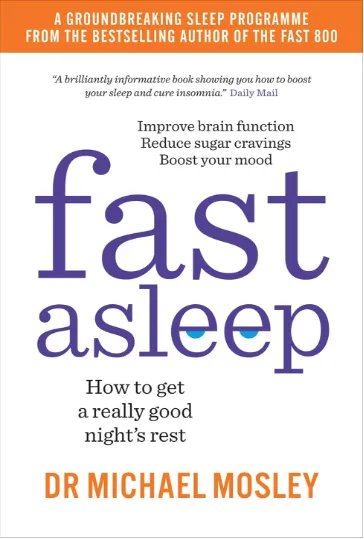
Fast Asleep: How to get a really good night's rest by Dr Michael Mosley
A good night's sleep is essential for a healthy brain and body. So why do so many of us struggle to sleep well? In Fast Asleep, Dr Michael Mosley explains what happens when we sleep, what triggers common sleep problems and why standard advice rarely works.
Prone to insomnia, he has taken part in numerous sleep experiments and tested every remedy going. The result is a radical, four-week programme, based on the latest science, designed to help you re-establish a healthy sleep pattern in record time.
With plenty of surprising recommendations - including tips for teenagers, people working night shifts and those prone to jet lag - plus recipes which will boost your deep sleep by improving your gut microbiome, Fast Asleep provides the tools you need to sleep better, reduce stress and feel happier.
We’re not just about overcoming obstacles, we’re about transforming lives.
Book Recommendation
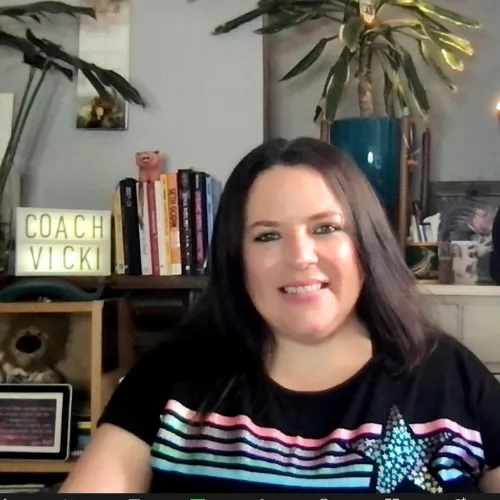
Victoria Canham - Performance and People Strategic Partner
Victoria Canham is an ICF-accredited Certified Professional Coach and the founder of Victoria Canham Consultancy. We are a specialist performance consultancy partnering with senior leaders and HR teams to elevate culture, leadership, and employee experience. Rooted in behavioural insight and change expertise, we diagnose what's truly holding performance back, co-creating practical, strategic interventions that drive sustainable business results and build workplaces that work—for people and performance.
Follow with us on social media


💸 Your people don’t leave for money. 💣 They leave for culture. 🔧 I fix that. 🏆 Retention & performance strategy that works.
Book a ☎️ | Fix the Leaks


© Copyright 2026 Victoria Canham Coaching | Website built by Me on FEA Create (aff.)
Performance Coaching Reading, London, Berkshire, Oxford | St George's Road, Reading, Berkshire, United Kingdom, RG30 2RL | +44 7377 527 529 | [email protected] Open Monday to Friday 9 am until 5 pm